Cost a whole batch, then divide
Do not try to cost one plate directly. Cost one batch, the way you actually cook, and divide by how many plates it gives.
- Write down everything that goes into one batch, with what you paid for it: potatoes, besan, oil, pav, masala, chutney.
- Add the share of things you use for many batches, such as oil, gas and packing, for one batch.
- Count how many plates the batch really gave, after the ones that broke, burned or were given away.
- Divide the batch cost by the plates. That is your cost of one plate.
An example, to show the arithmetic only: a batch costing ₹760 that gives 100 vada pav costs ₹7.60 a piece. Sold at ₹20, the food cost is 38% of the price.
The costs stalls forget
- Oil that is topped up every day, not bought once a month.
- Gas: a cylinder lasts a known number of days, so it has a cost per day.
- Free chutney, onions, chillies and the extra pav for a regular.
- Packing: paper plates, bags, foil, tissues.
- What is thrown away at night.
The one number to check every week
Add up all the raw material you bought in the week and divide it by the week’s sales. That is your food cost as a share of sales. If it creeps up week after week, prices have risen or waste has, and it is time to look at your rates or your portions.
Then take away the rest of the week’s expenses, such as rent, a helper’s wages and electricity, to see what is truly left.
How DukanUp does this for you
Record raw material as you buy it, with a rate and a supplier, from + Bought on the Home screen. The Home screen of a food stall then shows today’s sales, the bills, and the food cost as a share of sales, and the profit report shows sales less what you bought. You can also type a cost to make for each dish, and count profit from that instead.
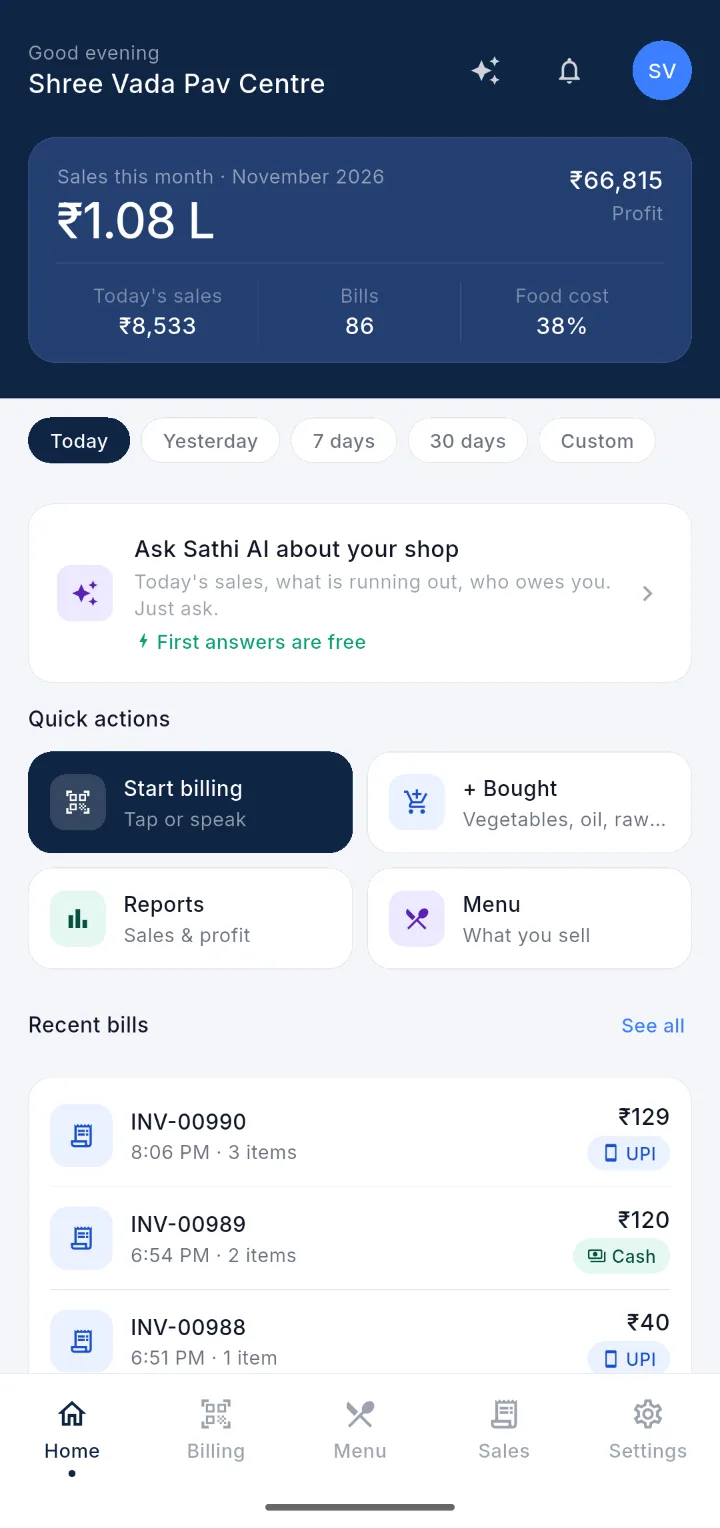
Honest limits: DukanUp does not keep recipes and does not count potatoes down as you sell. The cost of a dish is a number you set, or the raw material you bought. Sales less what you bought is on the Free plan; net profit after your other expenses is on Plus.
Questions
What is a good food cost for a stall?
It depends on the dish and the area, so compare yourself with yourself: work out your food cost every week, and look into it when it rises. A rise usually means prices went up, portions grew, or more was thrown away.
Should I include my own time in the cost of a plate?
Keep it separate. Cost the plate from what you buy, then take away the week’s expenses, a helper’s wages included. What is left is what your own time earned.
Does DukanUp work out the cost of a plate from a recipe?
No. It does not keep recipes. You type the cost to make for each dish, or let the profit view work from the raw material you bought.
